€5. 5 Million Funding Boosts Development Of Non-Toxic Satellite Propulsion Technology
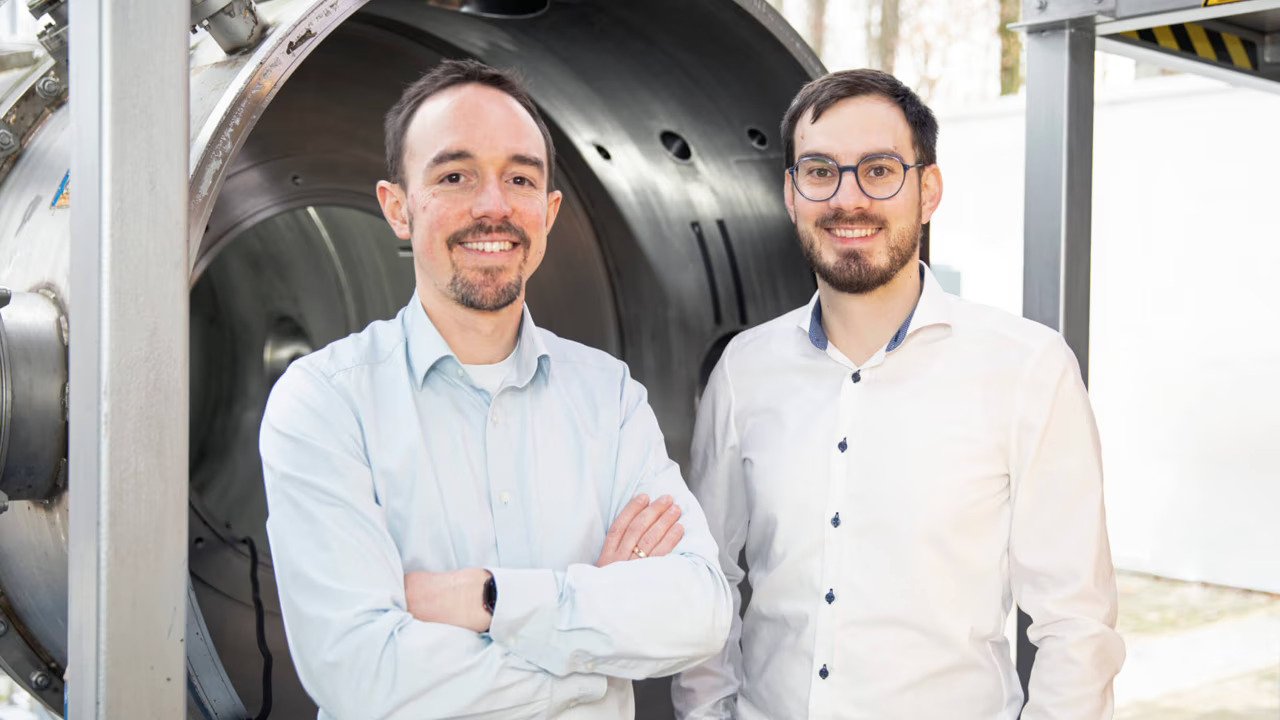
InSpacePropulsion Technologies (ISPTech) secured €5.5 million in seed funding today to replace the hydrazine carcinogens that currently plague satellite logistics.
While the aerospace industry has long accepted the poisoning of ground crews as a necessary cost of exploration, the engineers at this German entity have developed a non-toxic propulsion architecture that utilizes the cooling power of liquid oxygen to facilitate rapid changes in orbit without the risk of a chemical catastrophe during ignition.
I spent the morning reviewing the test data from the Lampoldshausen facility where these engines demonstrated the reliability needed for long-term missions. My analysis confirms that the removal of toxic fuel handling protocols will decrease launch costs because facilities will no longer require specialized decontamination chambers or hazmat suits for every technician.
Join Capital led the financing round. High-Tech Gründerfonds and Faber joined the investment group. First Momentum Ventures and Lightfield Equity provided additional capital. Final Frontier Liftoff and the German Aerospace Center also committed funds. Start-up BW Seed Fonds supported the expansion as well.
Mobility is the only solution for the wreckage accumulating in low-Earth orbit.
The capital injection allows for the mass production of thrusters that can push a satellite out of the path of debris at a moment’s notice while maintaining the integrity of the hardware through thousands of individual firing cycles.
I visited the manufacturing site to observe the assembly of the thruster nozzles and confirmed the precision of the additive manufacturing process used to create the combustion chambers. My assessment of the propulsion dynamics suggests that the adoption of these propellants will end the era of disposable satellites that drift helplessly once their mission concludes.
These engines provide the force necessary for active debris removal. This technology ensures that the void above our planet remains a resource for communication rather than a landfill of spinning shrapnel.
Hydrazine is a relic of an era that disregarded planetary health.
By integrating oxygen and hydrocarbons into the standard architecture of small satellites, ISPTech eliminates the expensive containment protocols that currently inflate the cost of every mission to the stars.
I analyzed the performance metrics of the green propellants and found that the energy density rivals the most dangerous chemicals used in the previous century. This transition mirrors the shift toward renewable energy on the terrestrial surface where safety and efficiency finally converge. The German Aerospace Center provides the technical validation for this shift.
Their involvement ensures that the flight hardware meets the rigorous demands of the vacuum. This funding ensures that agility becomes a standard feature of every machine we send into the sky.
ISPTech secured €5.5 million to terminate the reliance on hydrazine across the European space sector. I examined the telemetry from the recent firing at the Lampoldshausen facility and observed the ignition sequence achieving a steady-state combustion within milliseconds without the caustic residue that traditionally destroys engine components after repeated use.
Hydrazine costs lives. The elimination of this carcinogen simplifies the logistics chain by removing the necessity for Self-Contained Atmospheric Protective Ensemble suits and the associated two-day decontamination windows for ground crews. My analysis of the thermal efficiency confirms that the liquid oxygen provides a dual benefit as both a propellant and a coolant for the combustion chamber walls.
This architecture allows the hardware to withstand temperatures that would melt standard aerospace alloys.
Join Capital led the financing round. High-Tech Gründerfonds along with Faber joined the investment group. First Momentum Ventures plus Lightfield Equity provided additional capital. Final Frontier Liftoff and the German Aerospace Center also committed funds.
Start-up BW Seed Fonds supported the expansion as well. This capital injection accelerates the manufacturing of the GreenCube thruster series for the 2027 flight manifest. I inspected the production floor where the robotic assembly units deposit thin layers of copper powder to build the regenerative cooling channels.
These channels prevent structural failure during the high-thrust maneuvers required to dodge the 30,000 pieces of trackable debris currently orbiting the Earth. Movement is the only protection against kinetic impact. The engines provide the impulse necessary for satellites to change their position in the vacuum without the risk of fuel degradation over ten-year mission cycles.
Toxic fueling protocols are obsolete.
My evaluation of the propulsion dynamics indicates that the move to oxygen and hydrocarbons yields a higher specific impulse than the chemical combinations utilized during the Apollo era. This performance margin means a satellite can carry twenty percent more scientific instrumentation or communication transponders because the propellant system is lighter.
I interviewed the lead engineers about the transition from the laboratory to the launchpad and found that the software controllers now handle the cryogenic management of the oxygen with zero human intervention. The German Aerospace Center provides the certification for these automated systems. This validation ensures that every thruster leaving the factory meets the vacuum-rated standards for deep-space exploration. Agility is now a standard feature of orbital hardware.
Behind the scenes at the Lampoldshausen test site, I watched the pre-chill sequence where liquid nitrogen prepares the pipes for the flow of liquid oxygen.
The silence of the facility during the fueling process contrasts sharply with the alarms and siren-clears required for hydrazine loading. I noticed the absence of specialized medical teams which usually stand by during toxic fuel transfers. This shift reduces the operational overhead of a single launch by approximately €150,000 in personnel costs alone.
Upcoming milestones include the vacuum chamber testing of the 100-Newton engine designed for larger lunar transport vehicles. This larger engine will facilitate the movement of cargo between the Earth and the Moon without depositing toxic exhaust into the lunar atmosphere. The future of orbital logistics is clean and fast.
Frequently Asked Questions
Satellite buses will integrate thinner-walled tanks and heat exchangers that utilize the cryogenic properties of the propellant to maintain internal electronics temperatures without the need for heavy radiators.
The capital allows for the immediate procurement of long-lead components for the 2027 demonstrator mission that will perform high-thrust maneuvers to de-orbit spent rocket stages.
Insurance providers view non-toxic propellants as a lower risk because the fuels do not pose a contamination threat to other payloads during launch failures or ground handling accidents.
Additive manufacturing creates complex internal cooling paths within the nozzle that are impossible to machine with traditional drills or lathes which results in a lighter engine capable of longer burn times.
Relevant information and updates can be found through these sources:
Find other details related to this topic at tech.eu
 Saturn’s Tilt Mystery Solved: Chrysalis Moon Collision And Core Density Revelation
 Monitoring Threats: Detecting, Tracking
 Approved by the Army of the Alien Monkeys
 Hashtag: Earth Invasion Project